Property owners requiring pest control services Jackson rely on systematic architectural defense to halt active biological breaches caused by central Mississippi's high humidity and expansive Yazoo clay soils. Untreated structural voids and damp crawl spaces provide ideal harborage for destructive subterranean termites, wood-boring pests, and prolific disease vectors.
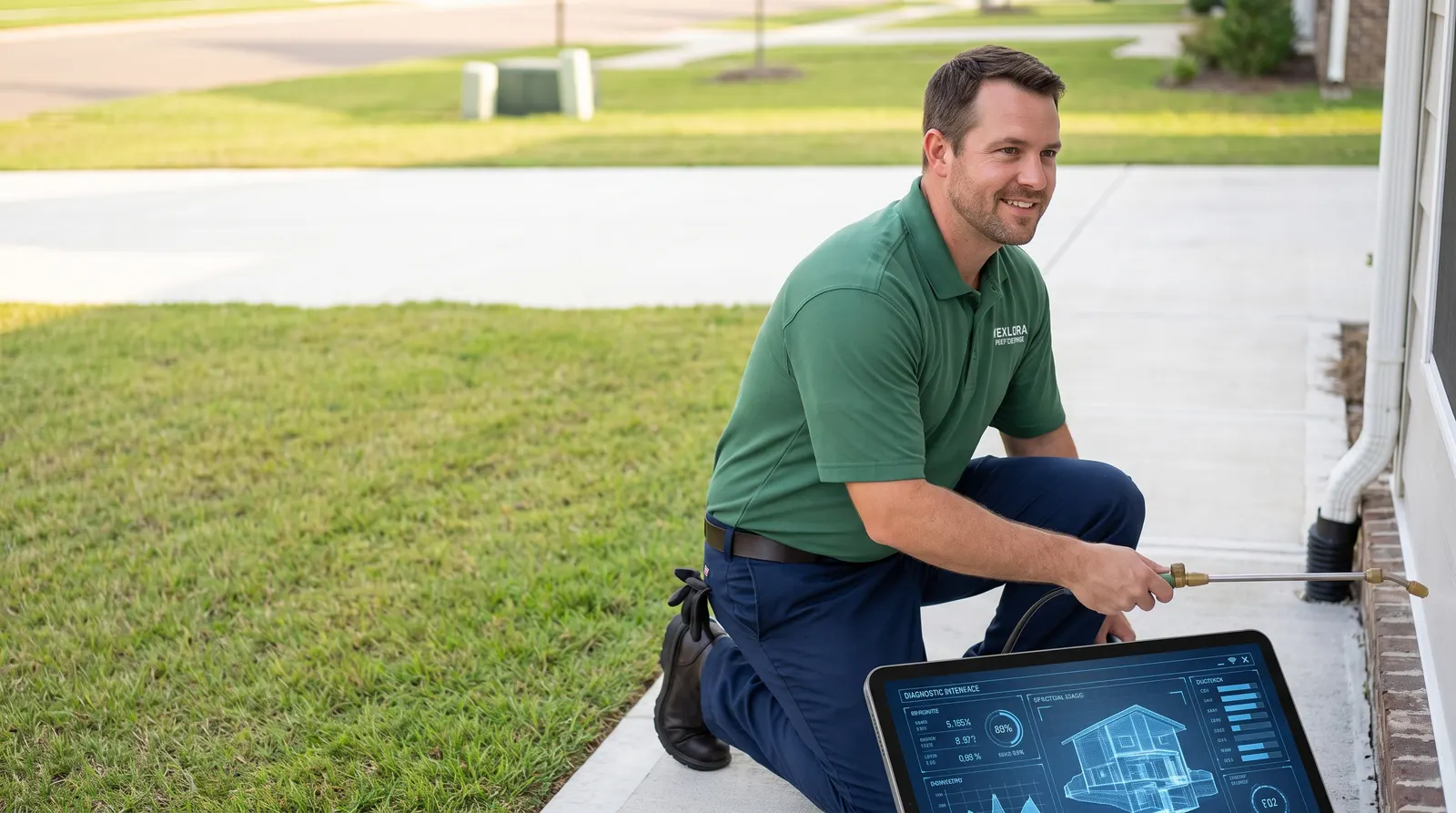
A pest control services company in Jackson is a specialized biological defense contractor that eliminates structural insect and rodent infestations using targeted chemical barriers, thermal remediation, and physical exclusion protocols across residential and commercial properties.
Every service reflects the same meticulous attention to detail, whether it's a single job or a larger pest control services project across Jackson.
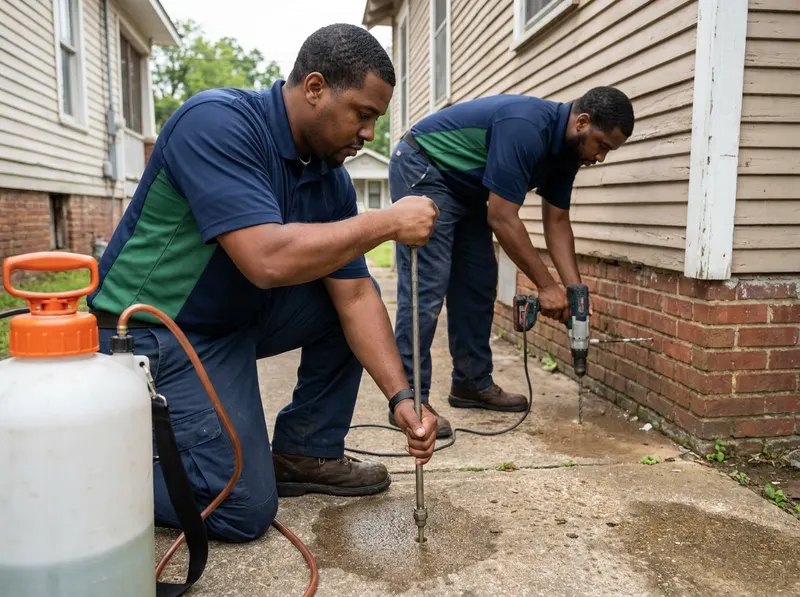
Subterranean termites cause severe structural failure in southern pine framing across Hinds County. Eradication utilizes non-repellent liquid termiticide trenched 6 inches deep and rodded into foundation footers at 4 gallons per 10 linear feet, establishing an undetectable perimeter that foraging workers carry into subterranean colonies to eliminate queens. Technicians treat expansion joints, drill through slab penetrations at 12-inch intervals, and inject chemical zones under garage aprons and covered patios to seal subterranean entry points. Pier-and-beam foundations receive specialized trenching encircling every crawl-space masonry pier, preventing termites from constructing exploratory mud tubes up structural pilings into subflooring sub-timbers.
Get a quote →
German and American cockroach populations exploit moisture reservoirs in crawl spaces and wall voids. Control protocols deploy precise bait placements featuring hydramethylnon or fipronil combined with insect growth regulators (IGRs) like pyriproxyfen, breaking reproductive cycles and eliminating reproductive females hidden deep within plumbing chases. Technicians employ HEPA-filtered vacuum extraction to remove aggregate live nymph and adult reservoirs from electrical motor housings, compressor coils, and beneath commercial cabinetry, immediately reducing allergen loads. Microencapsulated non-repellent dust formulations are injected behind electrical cover plates and baseboard margins to establish a residual protective envelope that persists up to 90 days.
Get a quote →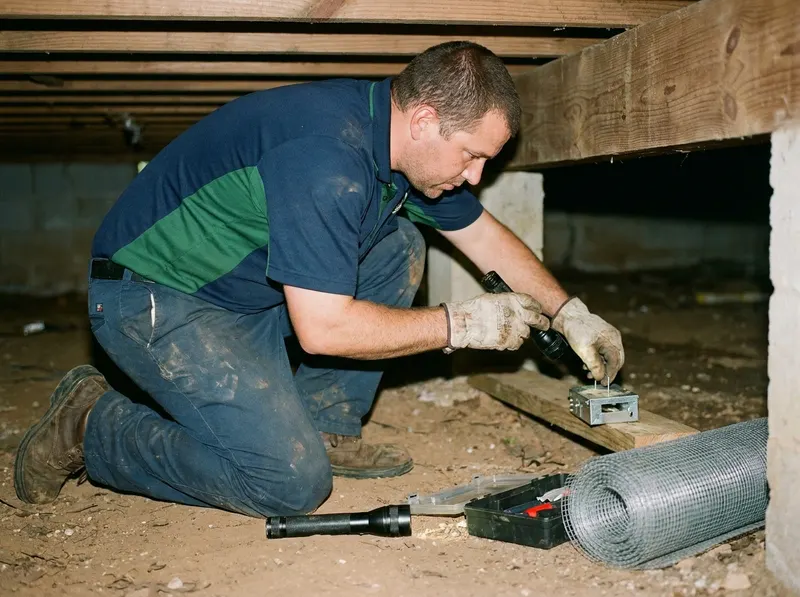
Roof rats and Norway rats compromise electrical wiring and contaminate blown attic insulation. Technicians deploy interior tamper-resistant mechanical traps to extract existing rodents, followed by complete physical exclusion using 16-gauge galvanized steel mesh and expanding polyurethanes across every foundation gap exceeding one-quarter inch. Technicians map structural runs along roof valleys, fascia corners, attic gable louvers, and utility line entrances, securing entry points with heavy-gauge copper mesh and architectural fasteners. Attic biological sanitization removes soiled droppings, extracts contaminated insulation material, and applies broad-spectrum antimicrobial misting to eliminate dangerous pathogens and attractant pheromone trails.
Get a quote →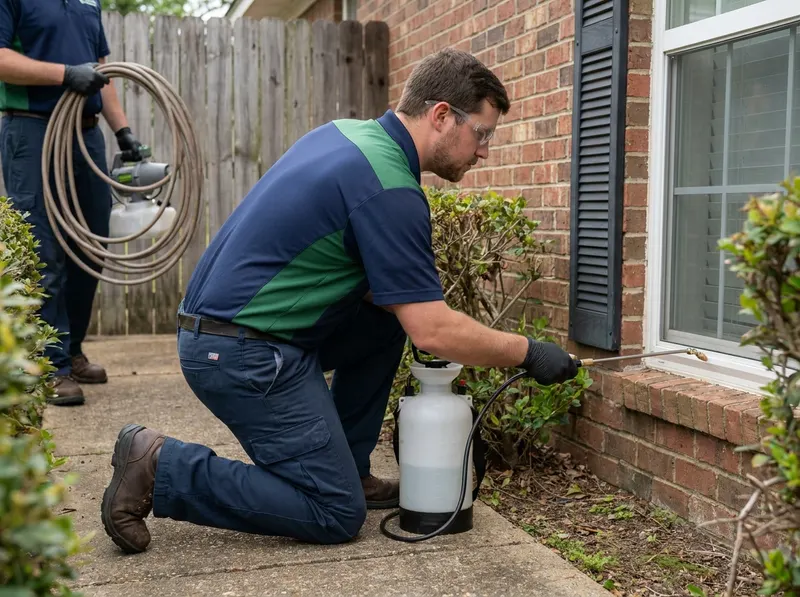
Brown recluse and black widow spiders nest in undisturbed crawl spaces, closets, and storage basements. Eradication combines precision residual dust applications into structural voids and electrical junction boxes, direct web removal, and broad-spectrum microencapsulated exterior barriers that intercept predatory spiders tracking secondary prey. Exterior treatment sweeps clear egg sacs and webbing from window eaves, soffits, and crawl space vents using telescopic inspection brushes. Foundation perimeters receive a 3-foot vertical and 5-foot horizontal band of wettable powder insecticide that maintains crystalline killing power across porous brick surfaces and damp Yazoo clay soil lines.
Get a quote →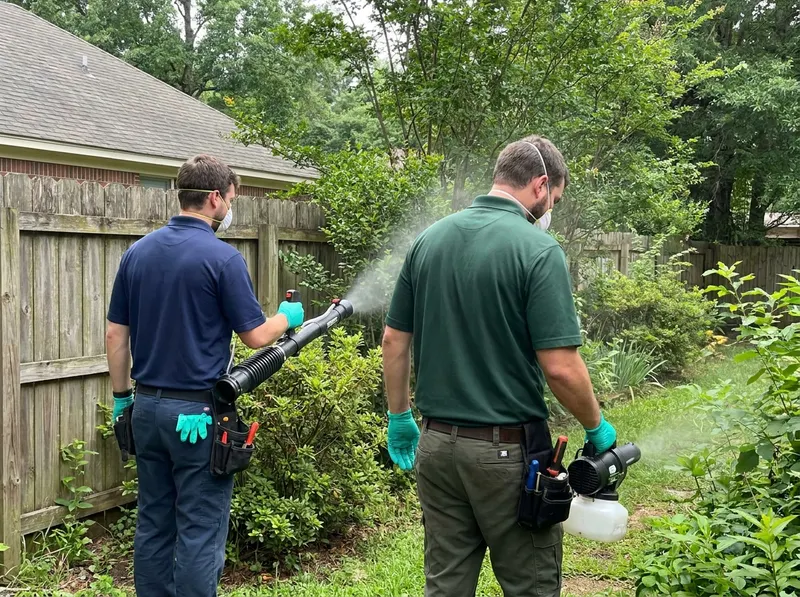
Mosquito suppression targets Aedes albopictus and Culex species that harbor in dense vegetation around residential lawns. Monthly applications between April and October apply microencapsulated pyrethroids to shaded foliage undersides and distribute biological larvicides containing Bacillus thuringiensis israelensis (BTI) into standing drainage ditches. Motorized mist blowers atomize active barriers across lower leaf canopies, fence lines, and ornamental shrubs where adult vectors rest during daytime heat. Technicians treat uncirculated yard water, gutters, birdbaths, and exterior catch basins with slow-release methoprene briquettes, stopping aquatic pupal development for up to 30 continuous days.
Get a quote →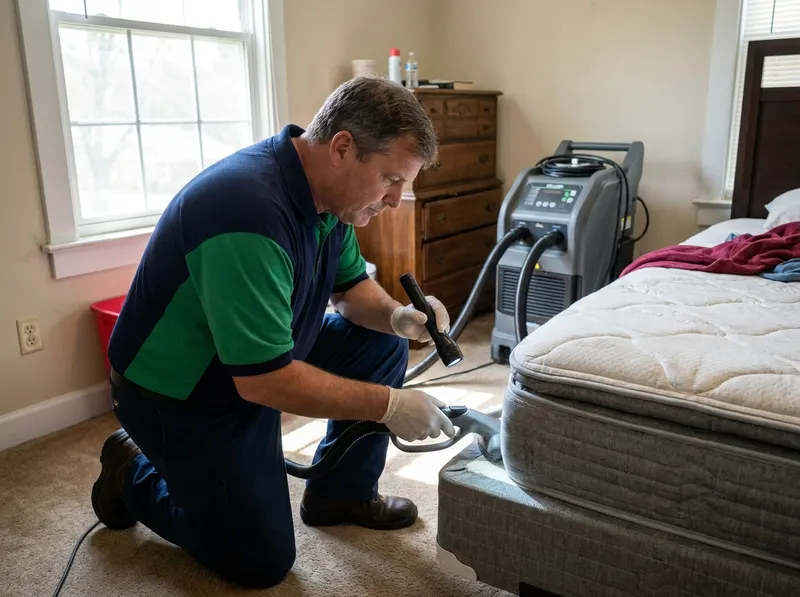
Bed bug infestations demand total eradication across mattresses, baseboards, and wall voids. Protocols combine structural thermal remediation heating rooms to a lethal threshold of 122°F for over 3 hours alongside precision residual desiccant dusts injected behind switch plates and crown moldings to neutralize re-emergence. Industrial high-output thermal heaters and directional airflow fans eliminate hot-and-cold micro-pockets within closets and interior subfloors. Specialized amorphous silica dust applications provide passive mechanical desiccation that abrades bed bug cuticles, preventing any surviving insect or freshly hatched nymph from re-infesting clean structural areas.
Get a quote →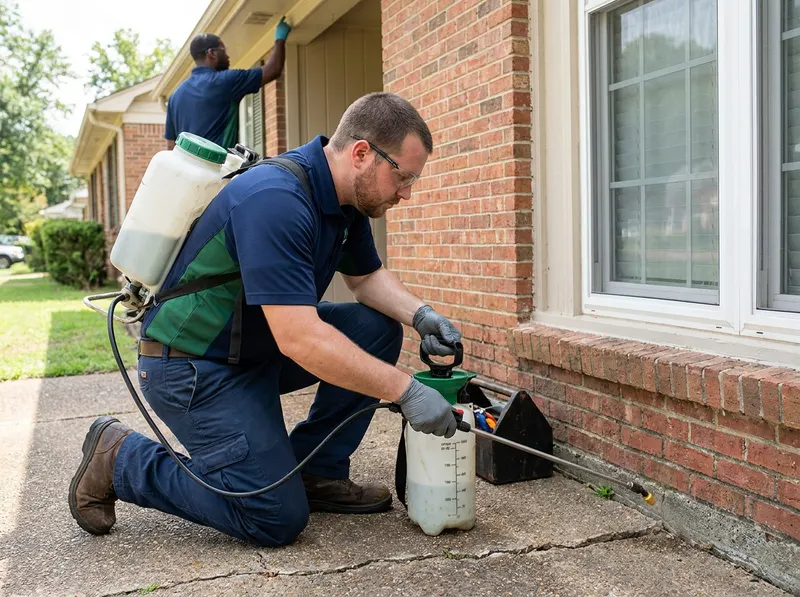
Red imported fire ants and indoor odorous house ants build vast sub-surface colonies that invade electrical infrastructure and interior slabs. Control involves slow-acting broadcast toxicant baits containing abamectin or hydramethylnon, allowing foraging workers to distribute active ingredients throughout the colony network before worker mortality occurs. Exterior yard turf receives precision broadcast treatments utilizing calibrated granular spreaders to achieve uniform distribution across lawns and landscaped borders. Structural slab perimeters and electrical transformer pads are injected with non-repellent liquid insecticides, halting indoor trailing along baseboards, countertops, and plumbing lines without inducing colony budding.
Get a quote →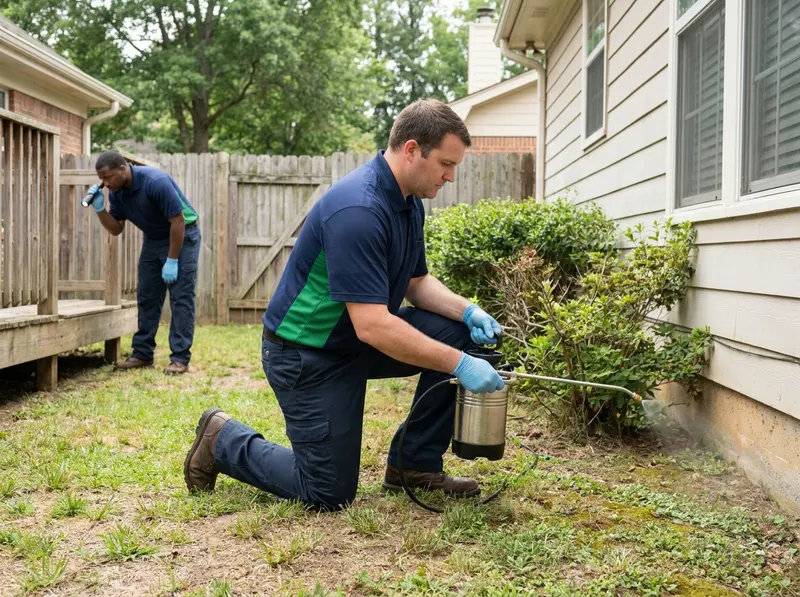
Fleas and brown dog ticks establish rapid larval populations in yard turf and indoor carpeting. Dual-action eradication pairs adulticides to knock down visible biting pests with residual insect growth regulators that disrupt chitin synthesis, permanently halting eggs and pupae from maturing into breeding adults. Indoor carpet matrices, upholstered furniture bases, and pet bedding margins receive targeted low-pressure spray treatments designed to penetrate deep carpet fibers. Exterior perimeter treatments thoroughly coat turf perimeters, shaded crawl-space borders, and lower exterior masonry where wildlife and family pets deposit parasite eggs.
Get a quote →You get a firm, itemized quote for your pest control services before any work begins, no surprises, no pressure.
Careful prep, tidy work, and a full cleanup when we are done. We treat your home and belongings like our own.
The same trusted, background-checked team from the first call to the final check.
Selecting the correct structural treatment depends entirely on pest biology, structural construction, and severity of infestation. If dealing with subterranean termites penetrating slab expansions or foundation piers, select non-repellent liquid soil barriers (such as termiticide trenched along footings) over localized foam injections; liquid soil barriers establish a continuous chemical envelope that foraging colonies transfer back to queens, whereas localized spot foaming offers only temporary relief confined to visible galleries. If managing active German cockroach populations inside kitchen walls, select bait matrix systems containing insect growth regulators rather than broad-spectrum synthetic pyrethroid foggers; pyrethroid aerosols cause colony budding and drive populations deeper into subflooring, while gel baits exploit coprophagy to achieve complete nest mortality.
If confronting rodent incursions in attics or crawl spaces, choose comprehensive mechanical exclusion with heavy-gauge copper mesh and 1/4-inch hardware cloth instead of exterior rodenticide stations alone; exterior bait boxes suppress numbers outdoors but leave structural gaps unsealed, allowing persistent recolonization during winter temperature drops. If managing persistent red imported fire ant mounds across residential lawns, choose broadcast insect growth regulator granular baits rather than contact drenching with liquid insecticides; contact drenches scatter satellite queens across turf boundaries, while granular bait matrices allow foraging nurse workers to carry active micro-doses directly down into brood chambers. If evaluating drywood or subterranean termite coverage for historical homes on elevated brick piers versus slab-on-grade tract builds, choose subterranean trenching combined with sub-slab injection beneath the concrete pads; pier-and-beam crawl spaces allow direct visual inspection and soil treatment around every individual masonry support, whereas monolithic slabs require high-pressure diamond drill penetrations every 12 inches through interior finished floors to treat hidden plumbing penetration collars.
The unavoidable trade-off between exterior broadcast barrier treatments and physical crawl space encapsulation lies in perimeter longevity versus upfront labor: liquid chemical perimeters require reapplication every 60 to 90 days under Jackson's annual rainfall of roughly 54 inches, whereas architectural vapor barriers and copper-mesh vent seals require higher capital expense but stop soil-borne moisture and insect entry permanently.
Every project gets a firm, written price after a free on-site visit. Ranges below for orientation.
Tell us about your pest control services job and we'll send a clear, written quote, usually the same day. Or just call and talk to a real Jackson pro.
(601) 767-1062
Jackson's geography along the Pearl River basin creates high soil moisture conditions paired with notorious Yazoo clay formations that expand and contract violently during seasonal weather shifts. This soil movement cracks concrete slab foundations and pulls crawl space piers out of alignment across historic neighborhoods like Belhaven, Eastover, and Fondren, creating direct subterranean fracture lines for eastern subterranean termites and American cockroaches. Near marsh habitats such as LeFleur's Bluff State Park, Mynelle Gardens, and the Jackson State University campus, persistent moisture saturation accelerates wood decay fungi, requiring heavy-duty crawl-space vapor mitigation and strict chemical perimeter maintenance to stop pest intrusion. Aging municipal drainage along Capitol Street, Woodrow Wilson Avenue, and State Street creates subterranean arterial corridors where roof rats and American roaches thrive, demanding aggressive mechanical exclusion and perimeter barrier defense across Hinds County homes.
Free estimates for Jackson & the surrounding area.
 Vexlora Pest Defense