Spiders penetrate structures primarily as opportunistic predators trailing subterranean termite flights, roach activity, or silverfish inside high-humidity crawl spaces. In established Jackson properties across Fondren…
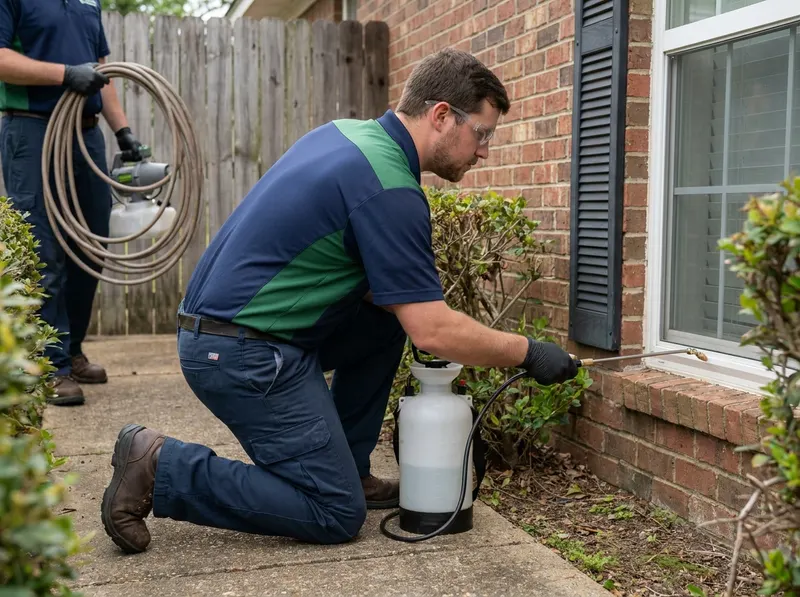
Spiders penetrate structures primarily as opportunistic predators trailing subterranean termite flights, roach activity, or silverfish inside high-humidity crawl spaces. In established Jackson properties across Fondren and Belhaven, raised pier-and-beam foundations and heart-pine subfloors create damp voids where brown recluse populations colonize undisturbed. Standard contact aerosol sprays fail against these species because arachnids hold their bodies above treated horizontal surfaces on elongated tarsi, absorbing negligible toxin doses. Effective eradication requires deep architectural disruption: applying botanical or synthetic microencapsulated pyrethroids to exterior sill plates, charging wall cavities with electro-dust formulations, and vacuuming active egg sacs from floor joists before secondary dispersion begins.
Slab-on-grade homes in Woodville Heights, West Jackson, and Broadmoor face different structural infiltration dynamics. Expansion joints, plumbing rough-ins beneath wet walls, and brick veneer weep holes function as direct conduits for southern black widows and aggressive wolf spiders. Remediating these breaches demands systematic perimeter exclusion: clearing heavy landscape mulch 18 inches away from foundational masonry, running a continuous 3-foot vertical barrier up external brick skirts, and installing mechanical mesh across exterior vents near LeFleur's Bluff State Park and the Pearl River drainage basin. Chemical barriers alone degrade rapidly under Jackson’s average 54 inches of annual precipitation and sustained 85% summer humidity; true containment pairs residual micro-encapsulates with exterior harborage elimination.
Selecting treatment scope depends on infestation depth and architectural framing. A targeted spot treatment eliminates isolated exterior cobwebs on porches and eaves, yet leaves primary breeding clusters flourishing inside unconditioned attics and subfloor insulation. For established indoor populations, whole-structure remediation serves as the required defensive protocol, combining interior baseboard void injection, crawl space moisture containment, and exterior defensive perimeters. While spot applications require lower upfront outlays, they fail to arrest re-infestation cycles, necessitating recurring interventions. Comprehensive mechanical barrier establishment commands higher initial resource deployment but reliably stops systemic reproductive cycles inside living areas.
Every job gets a firm, written price after a free on-site visit.
Tell us about your spider control job in Jackson and we'll send a clear, written quote, usually the same day.
 Vexlora Pest Defense